 ExplainThisDoc
Debt collection letter: real or a scam? How to check it
A collection agency demands money, adds fees and threatens consequences. Some of these letters are legitimate, some inflate the amount, and some are fake. Before you pay or put the letter aside, take a closer look: a genuine collector can tell you who the debt is owed to and what it is for, and in many countries collectors must be licensed or registered. This guide shows how to check both and how ExplainThisDoc helps you understand the letter.
What a genuine collection letter tells you
A legitimate debt collector can tell you who the debt is owed to, what it is for and how the amount is made up: the original amount, interest and any fees. Many countries require this in writing. In the US, for example, a collector must send you validation information within five days of first contacting you, including the creditor's name, the amount and your right to dispute it.
If you don't recognize the debt, ask in writing for proof before you pay. In the US you can dispute it within 30 days of receiving the validation information; the collector then has to stop collecting until it sends you verification.
Check the collector itself
In many countries, debt collectors need a licence or registration that you can look up. In the UK, debt collection firms appear on the Financial Conduct Authority's register; in the US, many states license collectors. Look the company up in the official register, then contact it using details from the register or its official website, never from the letter, and ask whether the letter really came from them. Criminals also use the names of real companies.
Signs of a fake collection letter
- You recognize neither the creditor nor the debt, and no bill or order is mentioned.
- You are asked to pay with gift cards, cryptocurrency, a payment app, a transfer to an unknown account or via a link or QR code.
- Pressure instead of explanation: very short deadlines and threats of arrest, seizure or a visit from bailiffs.
- The collector won't give a mailing address or phone number, or the costs are not itemized.
- The demand arrives by email with an attachment or link. Open neither until you have checked the sender.
A single sign does not prove fraud. Several together are a clear signal.
Respond the right way: pay, dispute or report
- The debt is genuine: pay, but only to an account you have confirmed independently, and keep the confirmation.
- You dispute it: say so in writing, keep a copy and proof of sending, and ask for proof of the debt. Don't make partial payments or sign an acknowledgment or payment plan while the claim is unclear.
- The letter is fake: don't pay, keep the letter and report it to the police or your country's fraud reporting service. In the US, that is ReportFraud.ftc.gov.
Don't simply ignore a letter. Papers from a court have strict deadlines. If you are unsure, a consumer advice service or a debt advice charity can help.
Analyze the letter for warning signs and keep the case together
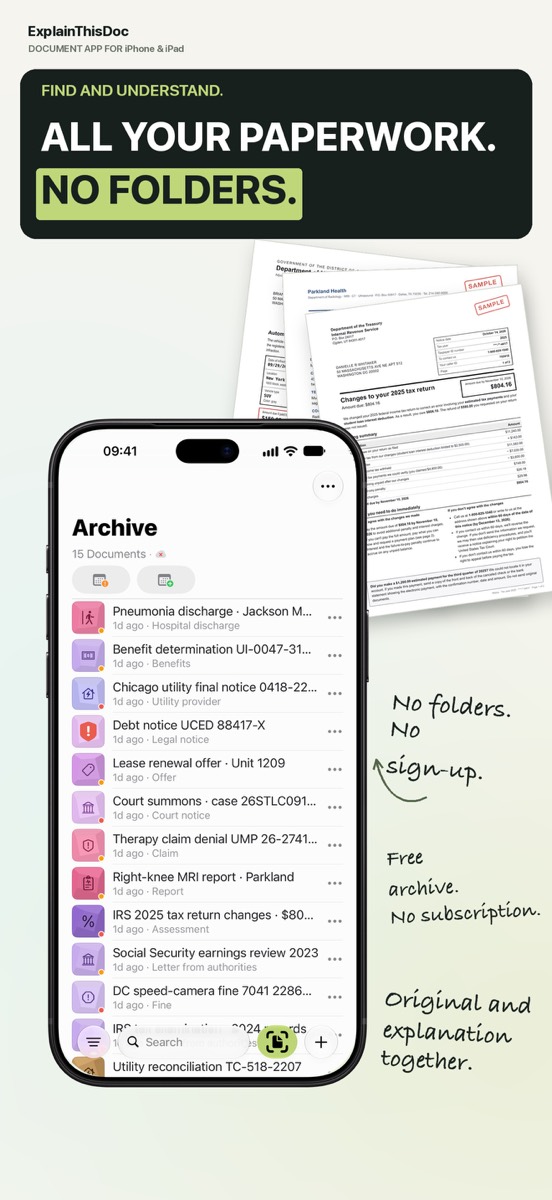
Scan the letter with ExplainThisDoc. With Pro, the app analyzes the letter for warning signs, shows who wants what from you and why, and lists the amount, deadlines and next steps. If the analysis considers the letter a likely scam, a security notice appears at the top, and a red shield marks the document in your archive. In the example, a sample debt collection notice, the explanation points to the threat of arrest, the demand for gift-card codes and a bank login, and the 48-hour countdown. The free Light analysis does not assess these signs.
Link the letter to the original bill or contract and note when you disputed it or whom you spoke to. That keeps the whole case together if more mail arrives. The app does not check registers, account numbers or links: a warning is not a proof of authenticity, and the absence of a warning does not prove a letter is real.
Have your debt collection letter analyzed for warning signs
Snap or import
Scan the letter or import a photo or PDF. Links and QR codes in the letter are not opened.
Analyze for warning signs
Pro checks the text for typical scam signs such as time pressure, threats or requests to enter login or payment details, and shows a security notice at the top if it suspects fraud. 1 credit per analysis.
Keep it in case something follows
Original, analysis and your notes stay together in your archive; a red shield marks suspicious documents.
- No sign-up
- No subscription
- Start right away

 Scan with your iPhone camera