 ExplainThisDoc
Is this letter real or a scam? Check the warning signs first
A debt collection notice for something you never bought. 48 hours to pay, by gift card. Letters like this rely on pressure, and that is exactly when a second look matters most. This guide shows typical warning signs, how to check a sender independently and how ExplainThisDoc points out suspicious features with Pro.
Typical warning signs
- A very short deadline and threats, such as “48 hours” or “arrest”.
- An unusual way to pay: gift cards, crypto, or a bank login.
- A claim without a contract or earlier bill you recognize.
- Being told not to talk to your bank or a lawyer.
- A QR code or link to an unknown payment page.
A single sign does not prove fraud. Several together are a clear signal to look closer.
What ExplainThisDoc shows with Pro
The Pro analysis actively assesses possible phishing, scam and deception features. In the example, a sample debt collection notice, the explanation says it is likely a scam: it threatens arrest, demands gift-card codes and a bank login, and its 48-hour countdown is pressure, not a real deadline. It then explains how to handle the letter. The free Light analysis does not assess these features.
Check the sender independently
- Look up the sender through your own source: an earlier bill, your contract or the official website.
- Call or write to them there – not through phone numbers, links or QR codes in the suspicious letter.
- Ask whether the claim exists and which account the payment should go to.
- Only then pay or click.
If you already shared bank details, contact your bank through its official channel.
Keep suspicious mail instead of throwing it away
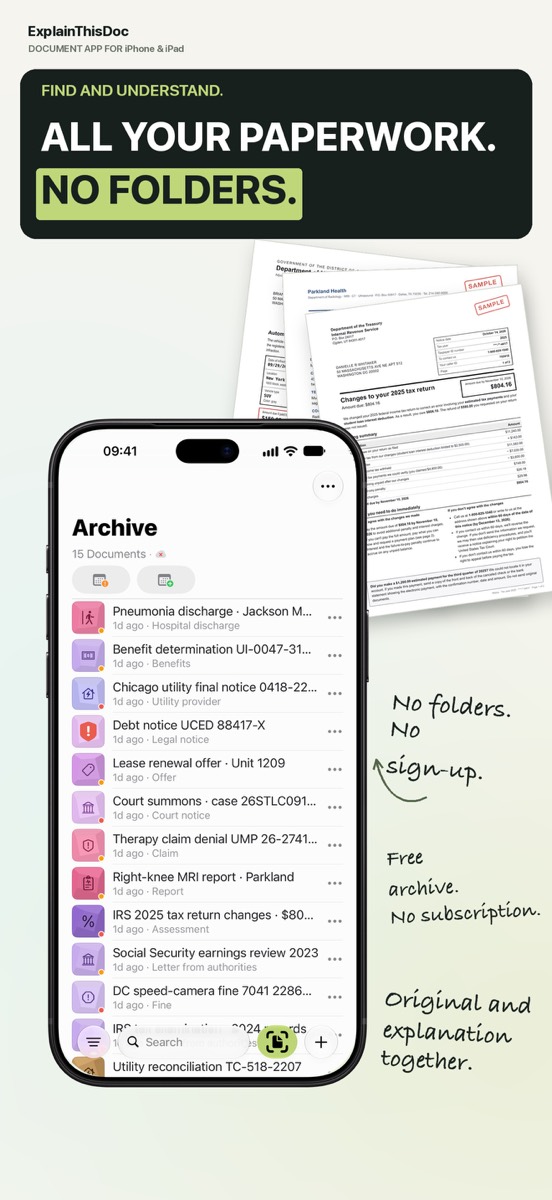
Do not throw a suspicious letter away straight away. In your archive it stays together with the explanation and your notes from checking it – in case a reminder follows or you want to report it. Scanning and the archive are free. The warning signs come with Pro: 1 credit per analysis. You get three trial credits once on your first installation.
Good to know
A warning is not a proof of authenticity, and the absence of warnings does not prove a letter is real. Real claims have real deadlines, so do not simply ignore a letter – check it independently.
Have suspicious mail analyzed for warning signs before you pay
Snap or import
Scan the letter or import a photo or PDF. Links and QR codes in the letter are not opened.
Analyze for warning signs
Pro checks the text for typical scam signs such as time pressure, threats or requests to enter login or payment details, and shows a security notice at the top if it suspects fraud. 1 credit per analysis.
Keep it in case something follows
Original, analysis and your notes stay together in your archive; a red shield marks suspicious documents.
- No sign-up
- No subscription
- Start right away

 Scan with your iPhone camera