 ExplainThisDoc
Understand an official letter: what does it want from me?
A letter from the IRS is on the table: $804.16 due instead of the refund you expected. Why – and do you need to respond? Official wording turns a simple question into an evening of searching. This guide shows what to look for in official mail and how ExplainThisDoc explains the letter in plain words. The original stays with the explanation and is right there when the next letter arrives.
What does this letter want from me?
Official mail almost always follows the same structure: the sender and a reference number at the top, then the subject, the actual decision or request, and the reasons at the end. A notice or determination decides something, such as a change to your tax return or a benefit amount. A request asks you for information, documents or a response.
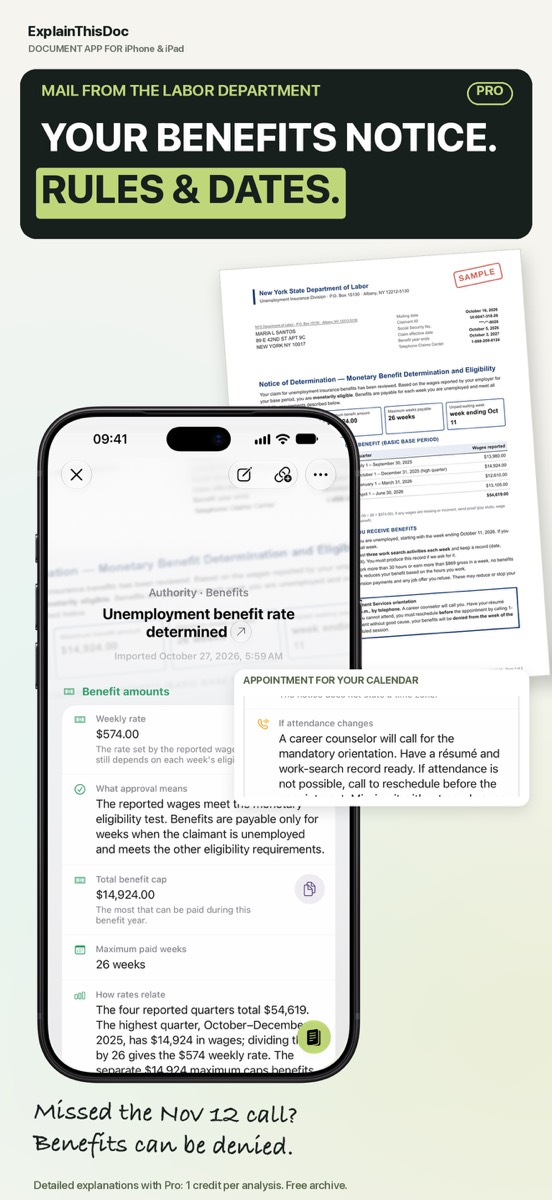
Snap the letter with ExplainThisDoc or import the PDF. The explanation starts with what matters to you: in the example, the $804.16 now due, and below it what the IRS changed on the return.
Do I need to respond – and by when?
The most important question is rarely in the first line. Look for phrases like “you must”, “by” or “within 30 days of the date of this notice”. Notices usually explain your appeal or dispute rights near the end. Payments often have their own due date.
With Pro, ExplainThisDoc sets out obligations and dates separately. In the benefits example, a career counselor will call for a mandatory orientation, and one tap turns the appointment into a prepared calendar entry. Missed appointments can affect benefits, so check the rules in the original letter. If an explanation shows no deadline, that does not mean there is none.
Official wording in plain language
“Assessment”, “reconciliation”, “eligibility requirements”: many terms are precise but not written for the kitchen table. ExplainThisDoc explains the content in plain language and in your app language, even if the letter is in a language you read less easily. With Light this works in languages supported by Apple Intelligence; otherwise with Pro. When you call, quote names, amounts and reference numbers exactly as they appear in the letter, and use the letter's own wording for key terms.
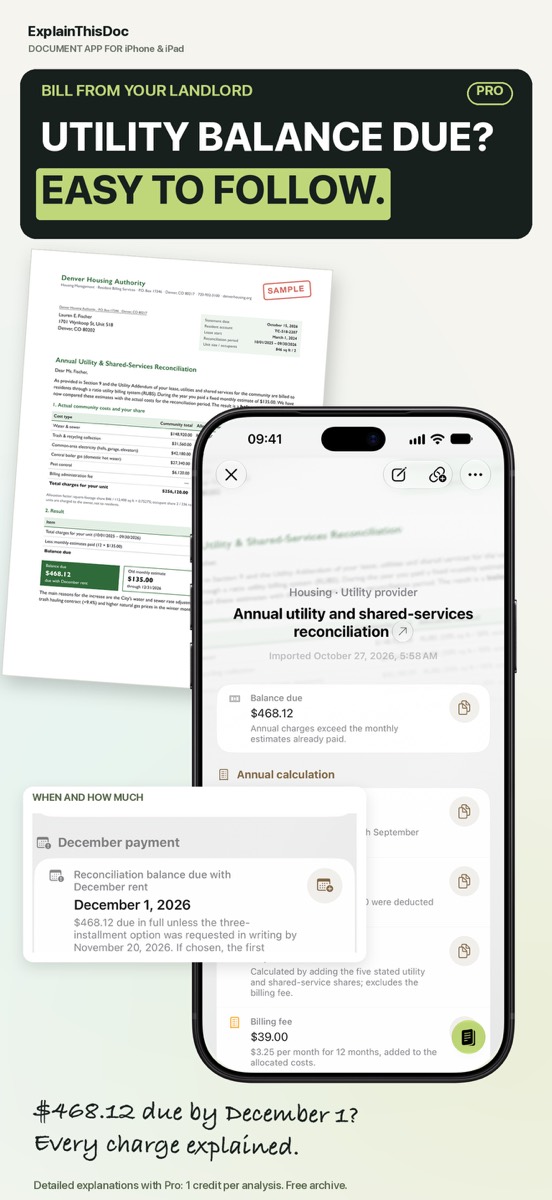
It helps with mail that is not official but just as confusing: for the annual utility reconciliation, the explanation shows the $468.12 balance and that it is due with the December rent.
File it – and find it again when the next letter comes
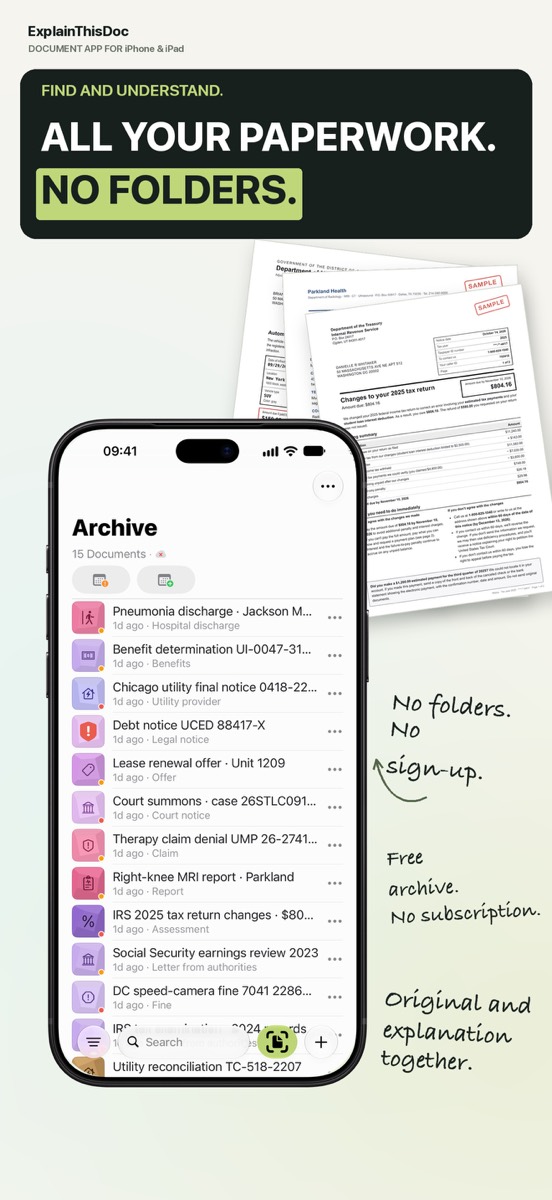
One notice is often followed by another: a reminder, a correction, the answer to your dispute. That is when you need the first letter again. In ExplainThisDoc every letter goes into your archive without folders or tags. A search word such as “IRS” or “utility” brings back the original, the explanation and your notes together. You can link letters that belong together.
Scanning, the archive and reading are free, with no sign-up and no subscription. Your archive stays on your device; iCloud is optional.
What the explanation does not replace
The explanation helps you make sense of a letter and prepare your answer. It is not legal or tax advice and does not decide whether a dispute makes sense. For large amounts, possible benefit cuts or tight deadlines, a tax professional, a legal aid service or the agency itself can help. With the explanation, you know what to ask.
Get your next official letter explained
Snap or import
Scan a document or bring in a photo or PDF. No sign-up, no folders.
Understand it in plain words
Light analysis, free on your device¹. In depth with Pro: 1 credit per analysis.
Find it when you need it
The original, the explanation and your notes stay together in your archive.
- No sign-up
- No subscription
- Start right away

 Scan with your iPhone camera
¹ With Apple Intelligence enabled on a supported device and in a supported language.